




Games and gatherings
Would You Rather Questions That Start a Debate Instead of an Argument
Make both choices tempting, strange, or inconvenient enough that people have something fun to defend.
Read the guideSpin for an impossible choice, pick your answer, and defend it to the room.
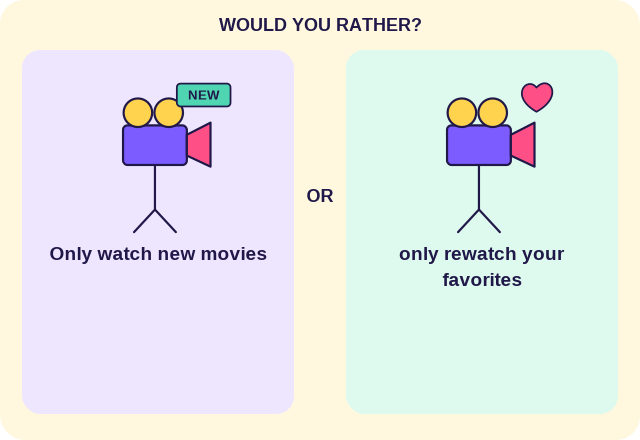
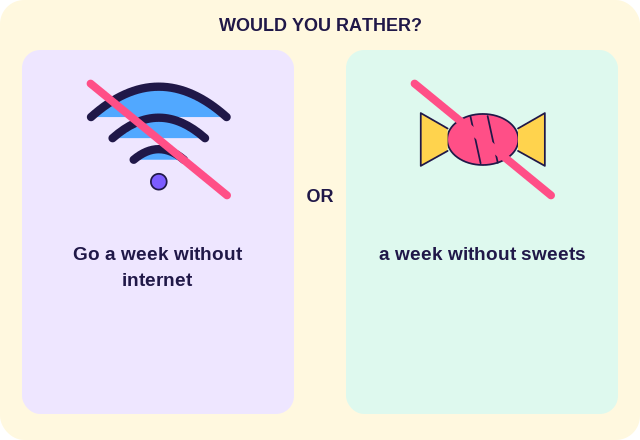
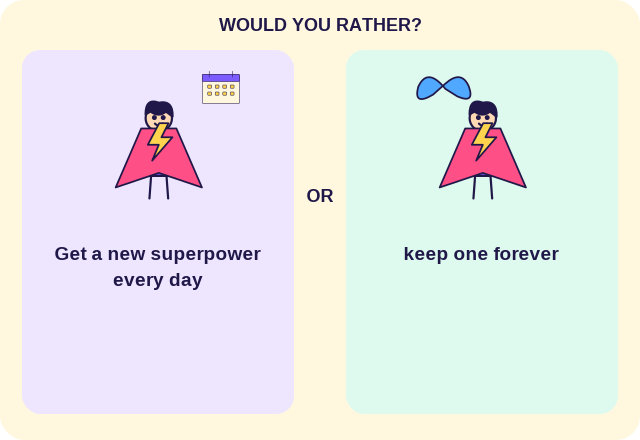
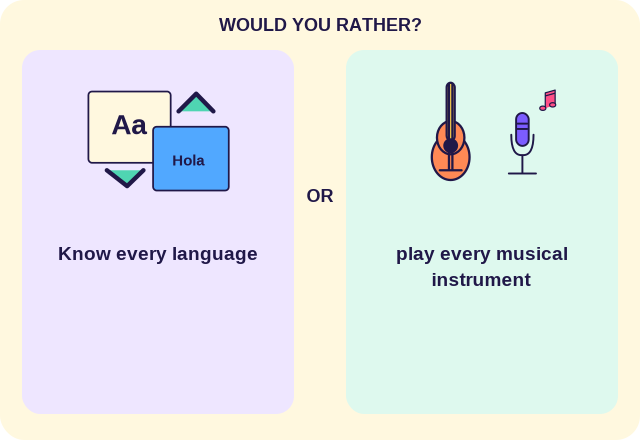
Example lists and ways to play ↓A means the first option; B means the second. Count a show of hands, or pass the device and let each player tap once.
No votes yet.
This is your group’s tally on this device, not an online poll. Repeated taps count as more votes, so agree who is counting. Each newly revealed question starts a fresh tally; refreshing clears it.
Choose the questions for this round. Edit an option to add a dilemma of your own.
Example lists and ways to play ↓A good dilemma presents two options people could plausibly disagree about. “Would you rather fly or teleport?” becomes more interesting when you ask whether flying is tiring or teleporting has a distance limit. Spin a question, let everyone choose before hearing the first explanation, and give each side an opportunity to make its case. That keeps one confident player from deciding for the group.
For a classroom, family evening or party, agree on a manageable question collection before you start. If your chosen mode offers removal after a spin, use that to move through fresh prompts; otherwise keep a quick note of the questions already asked. Remove any dilemma that crosses the group's boundaries rather than forcing an answer. For extra variety, use Truth or Dare or the Game Night Wheel when everyone needs a change of activity.
A Yes or No Wheel randomly answers a single binary question. Would You Rather randomly selects which question the group discusses; the participants still choose their own answers. Keeping that difference clear avoids confusing the wheel's randomness with the opinions of the people playing.
A good next read
Games and gatherings
Make both choices tempting, strange, or inconvenient enough that people have something fun to defend.
Read the guideGames and gatherings
Filter for the people, time, and rules knowledge in the room, then let the wheel settle a genuinely playable shortlist.
Read the guideGames and gatherings
Plan a Truth or Dare game with original questions and dares, three round formats, audience choices, and an agreed pass rule before playing.
Read the guideSpin a question, read both options, then let everyone choose a side before hearing the explanations. There is no correct answer to uncover. Someone choosing a tiny apartment in a favorite city while another chooses a huge house in an unfamiliar place is the beginning of a conversation, not a score to settle.
After the wheel reveals a dilemma, close the result card to find the group tally below the wheel. The first option is A and the second is B: tap once for each person’s answer, or have one host count raised hands. Undo removes the most recent vote, and Copy question & tally keeps the exact dilemma with its totals. A newly revealed question clears the previous tally, so copy it before the next spin if you want a record.
Use these dilemmas as a starting list. Ask which detail made the difference, then invite one follow-up rather than turning every answer into a cross-examination.
After choosing a side, each player has to explain which small detail decided it. Other players can ask one follow up question.
Give each side a benefit and a trade-off. “Free holidays or never going anywhere” is lopsided. “A free trip every year to a place you cannot choose, or paying for one trip to anywhere you want” gives people different reasons to decide. Say how often, for how long and under what conditions when those details would change the answer.
Do not add a new condition only after someone has chosen. If the group wants a second round, announce one change and let everybody answer again. A surprise month-long trip may divide the room differently from a surprise weekend away, and nobody has to defend their first answer under a different question.
Browse the audience collections below and read the actual questions before including them. Younger players may enjoy imaginary places, inventions and pets; teens may have more to say about schedules, hobbies or social situations. Avoid a prompt that assumes everyone has the same family circumstances, money or willingness to share personal experiences.
Keep both answers understandable without a long explanation. If a question depends on a game, film or inside joke only two players know, explain the reference or replace it. A custom dilemma about your group’s next outing can be more interesting than an unfamiliar celebrity comparison.
Each audience starts with one hundred selected questions. Uncheck any you want to leave out, or edit a row and keep it checked to include your own dilemma. The wheel skips questions already drawn in the current round until the selected collection has been used, then begins another round. Use Reset choices when you want to restore that audience’s starting list.
For performances as well as questions, play Truth or Dare. For three names and three categories, try Kiss, Marry, Kill. The Would You Rather guide develops more question formats, while the Game Night Wheel can choose another activity when the conversation winds down.
Preview the paired choices and find questions for your next conversation or game night.