Baby names
Using Family Records to Build an Italian Baby Name Shortlist
Turn an old photograph, a handwritten name, or a family story into a thoughtful naming conversation without inventing missing details.
Open the matching wheel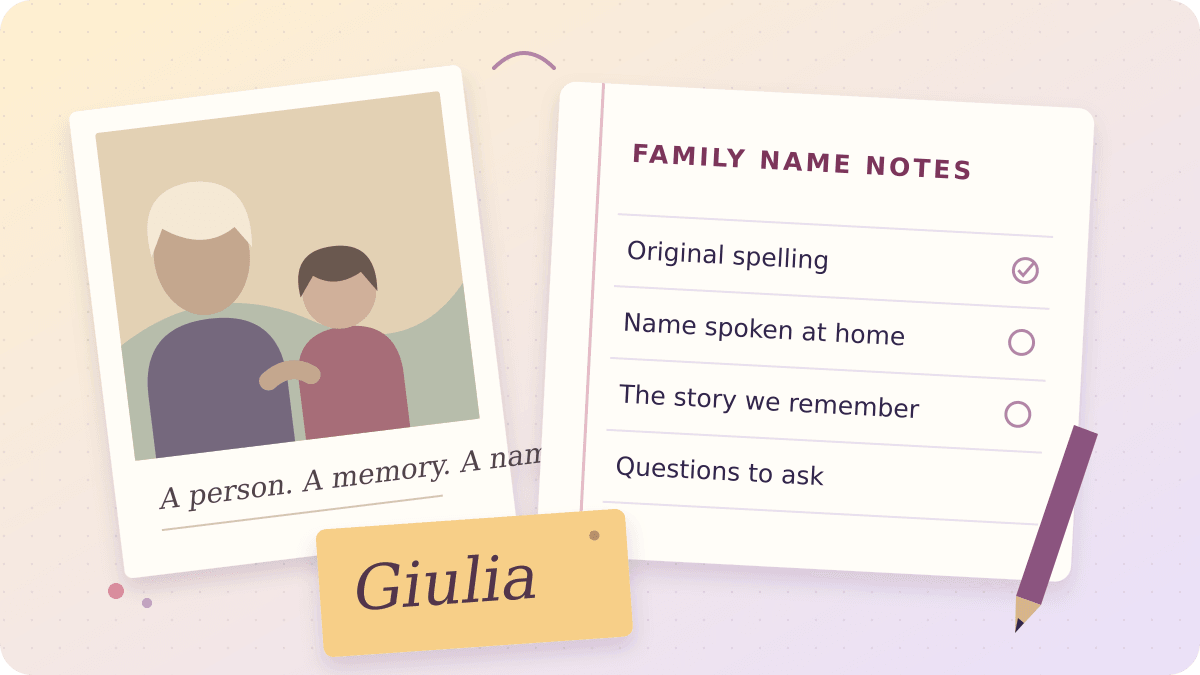
Turn one uncertain caption into a usable family note
Imagine an old photograph has a difficult handwritten name and a relative remembers the person as “Lina.” You do not yet know whether Lina was the written first name, a nickname, or a family form.
- Keep a copy of the caption and transcribe uncertain letters with a question mark rather than filling them in silently.
- Record the relative’s memory separately: “Aunt remembers hearing Lina.”
- Ask whether another document or knowledgeable relative can clarify the exact written form.
- Keep the baby-name candidate on a separate line, with the reason you like it today.
You may still choose Lina because you love it, even if the record stays unresolved. The honest explanation is a family association you can describe, not a newly invented claim that the photograph proves a particular origin or formal name.
Photograph the name before normalizing it
Start with the actual record if you have one: a caption, letter, announcement, or other family document. Copy what it says before changing spelling or expanding a shortened form. Handwriting can be ambiguous, and a name remembered in conversation may differ from the one written down. Mark uncertain letters rather than quietly deciding what they must be. A baby shortlist should not become the place where an unverified family detail turns into official history.
Ask about the person, not only the letters
A relative may remember that someone almost never used their formal first name, or that a nickname belonged to a particular stage of life. Ask what people called the person and what made them memorable. These answers can suggest a tribute you actually enjoy using. They can also explain why copying the formal name exactly feels less personal than preserving a sound, an initial, or a middle name connection.
Separate a heritage connection from a language promise
Choosing an Italian name does not require pretending your household will use it in one fixed way. Decide how you expect to say it, how relatives say it, and whether variation feels comfortable. If pronunciation or a regional family tradition matters, check with a knowledgeable speaker rather than guessing from spelling. Record the source of the explanation. You can appreciate the name while being honest about what you have and have not verified.
Try the tribute in present tense
Say the proposed name in ordinary sentences about your future child. You are honoring a person while naming another person with their own life ahead. If every conversation returns to whether the choice is sufficiently authentic, pause and identify the specific concern. Browse the Italian name wheel for alternatives, then compare only names you like independently of the story attached to them. A meaningful tribute also needs to feel usable tomorrow.
The family record worksheet
- Exact written form and where you found it
- Any uncertain handwriting or missing context
- The name relatives actually used aloud
- What you admire about the person being honored
- Your proposed first name or middle name version
- Any pronunciation question that still needs a reliable answer